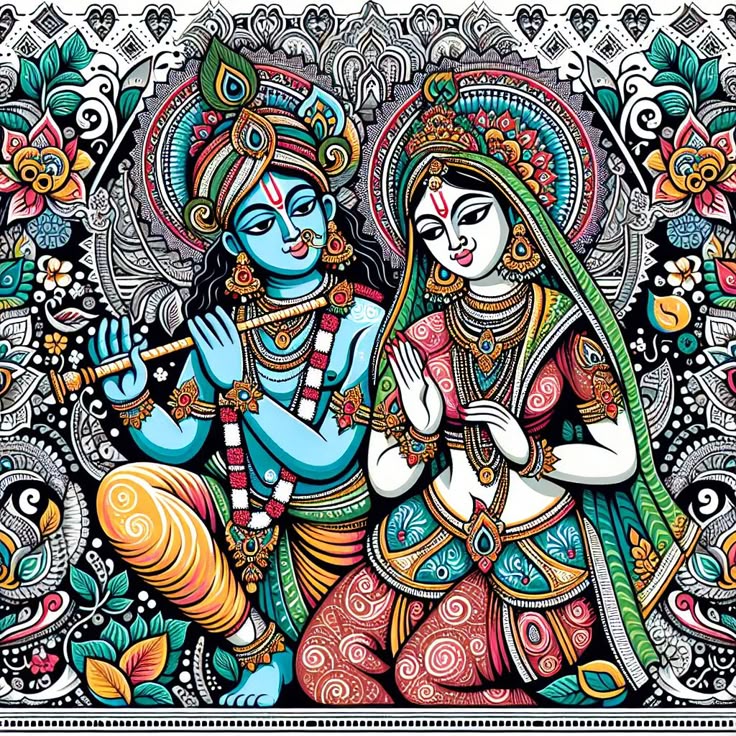
Madhubani painting, also known as Mithila art, is a traditional style developed in the Mithila region of Bihar. It is characterized by eye-catching geometrical patterns, double lines, and vibrant depictions of nature, mythology, and social events like weddings. Traditionally painted on mud walls using natural dyes and twigs, it is now globally celebrated on canvas, paper, and sarees.
1. The Five Distinct Styles
Madhubani art is divided into five distinct styles, each traditionally practiced by different community groups:
- Bharni: Known for rich, solid colors filling the outlines, depicting deities like Krishna, Shiva, and Durga.
- Katchni: Focuses on fine line drawings and delicate hatching patterns, with minimal color fill.
- Tantrik: Represents spiritual and tantric symbols, including yantras and protective motifs.
- Godna: Features repetitive geometric clusters and tattoos, traditionally done in black ink.
- Kohbar: Filled with fertility symbols like lotus, fish, and bamboo, painted in the bridal chamber.
2. Natural Colors and Techniques
What makes Madhubani art unique is the use of natural colors derived from plants, flowers (like marigold and hibiscus), charcoal, and turmeric. The paint is applied using fingers, twigs, brushes, and matchsticks. Double lines are drawn to outline the characters, and the background is completely filled with patterns of leaves, flowers, and birds.
3. Visiting Madhubani
Travelers visiting Bihar can explore villages like Jitwarpur and Ranti near Madhubani town. These villages have become open-air art galleries, where visitors can interact with national award-winning artisans and learn the craft in their local homes.